
Waking up with a sharp, shooting pain down your leg or sudden numbness in your big toe can be alarming. When your calf aches or your foot tingles, it is entirely normal to assume you pulled a muscle or injured a joint in your lower extremities. But the true source of your discomfort might be located much higher up in your body.
Your nervous system functions like an intricate electrical wiring network. When a "wire" gets pinched near the main circuit board—your spinal cord—the warning signals often travel all the way down to the end of the line. This means the severe pain you feel in your outer calf is frequently caused by an issue in your lumbar spine.
Understanding how these nerve pathways work is the first step toward finding real relief. This guide will explain the mechanics behind nerve pattern responses and highlight the specific conditions that cause radiating pain. We will also explore how seeking physical therapy for a pinched nerve in your lower back can provide a fast, comprehensive solution. By taking advantage of direct access to care, y'all can skip the long wait times for a specialist, save on medical expenses, and get back to moving comfortably.
Understanding Nerve Pattern Responses
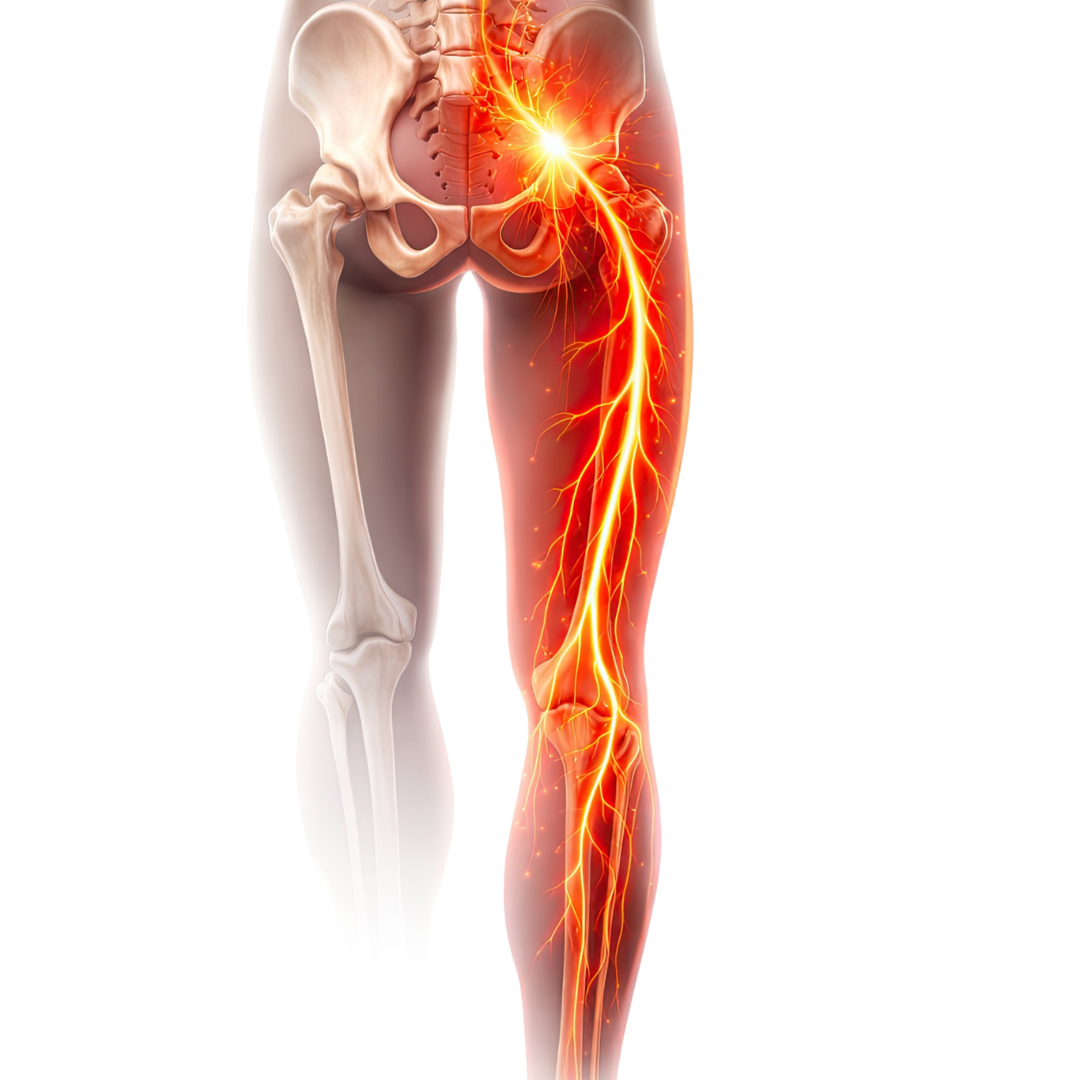
To understand why your lower back affects your feet, you need to look at how your nerves are mapped. Nerve pattern responses occur when a nerve root in your lower back becomes irritated or compressed. Instead of just causing localized back pain, the irritation sends distress signals along the entire path of that specific nerve.
For example, pressure on a specific nerve root in the lumbar spine is often linked directly to symptoms on the outer calf. In other cases, a compressed nerve might cause pain across the top of your foot or specifically in your big toe.
This type of nerve irritation rarely feels like a standard muscle ache. Patients commonly describe the sensation as a sharp, shooting pain. You might also experience numbness, a burning feeling, or a persistent tingling known as "pins and needles" traveling down your legs. Because the human body is so deeply connected, a problem in one central location routinely manifests as a painful symptom far away from the source.
Common Conditions That Cause Radiating Leg Pain
When evaluating nerve pattern responses physical therapy focuses on identifying the root cause of the compression. Instead of using technical jargon about specific vertebrae, we'll focus on the parts of the body involved and the common conditions that are triggering your pain.
Here are the most frequent culprits behind radiating nerve pain:
Sciatica
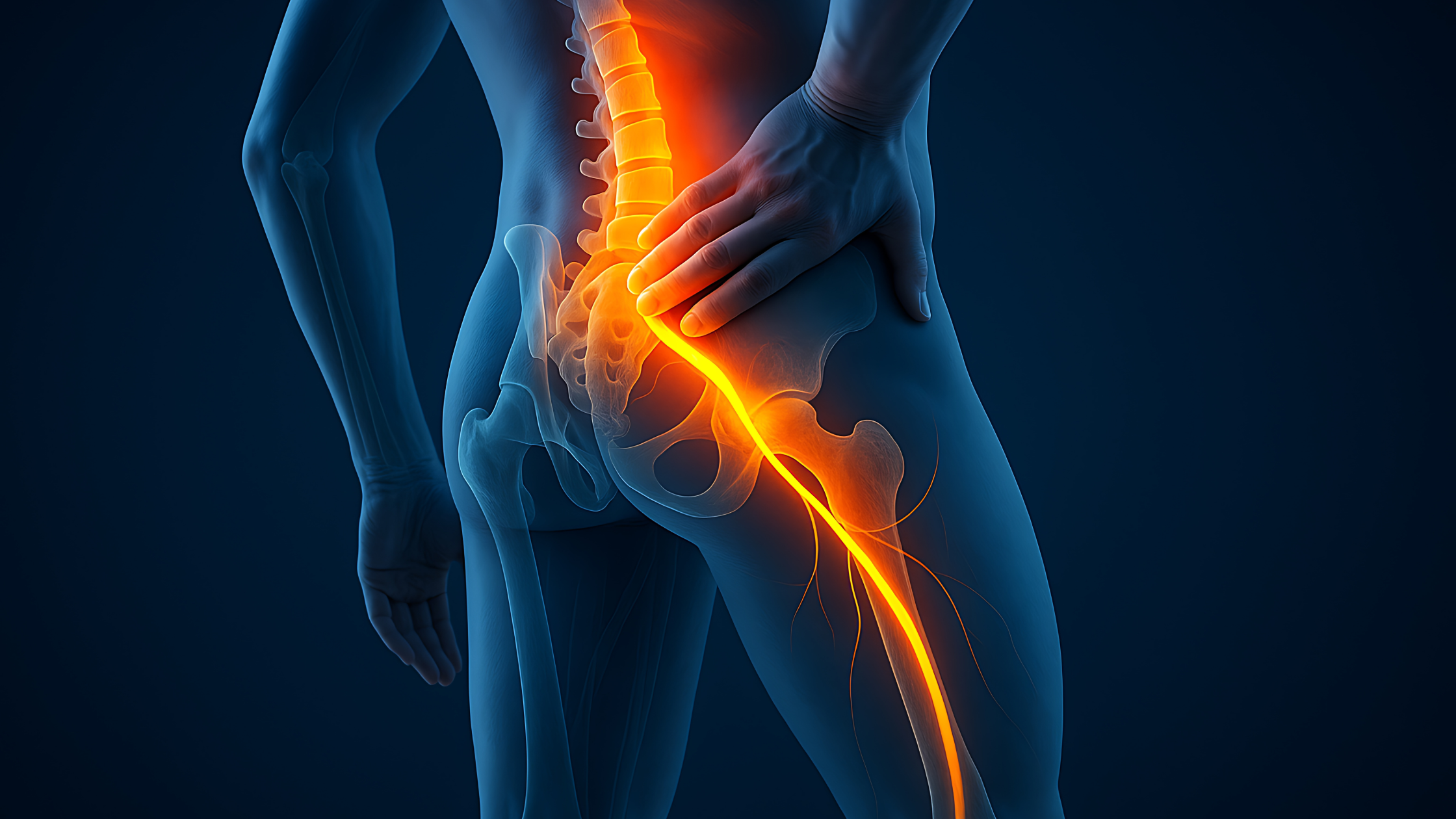
The sciatic nerve is the longest and thickest nerve in the human body, running from your lower back, through your hips and buttocks, and down the back of each leg. When this nerve experiences pressure, it results in sciatica. This condition causes radiating back pain that travels deep into the legs or hips. When researching sciatica lumbar radiculopathy symptoms, calf, foot, and leg pain are incredibly common complaints. The discomfort can make sitting, standing, or walking intensely difficult—for example, you might feel pain when you extend your leg to drive.
Lumbar Radiculopathy
Lumbar radiculopathy is a clinical term for a pinched nerve in the lower spine. This compression is often caused by a herniated disc, where the soft inner cushion of a spinal disc pushes out and presses against the adjacent nerve root. General age-related wear and tear can also narrow the spaces where nerves exit the spine. Regardless of the exact mechanical cause, this pressure generates the classic nerve pattern responses that radiate down into your lower extremities.
The Diagnostic Role of Your Physical Therapist
Many people believe they need to see a specialist or undergo an expensive MRI to figure out why their leg is hurting. In reality, physical therapists are highly trained to operate in a diagnostic mode right from your very first visit.
When you visit Curnyn Physical Therapy, our expert therapists use their deep understanding of anatomy and nerve pathways to trace your calf or foot pain back to its true origin. By carefully evaluating your mobility, strength, and nerve reflexes, we can pinpoint where the compression is occurring. This hands-on, diagnostic approach allows us to address the root of the issue immediately, rather than just masking the localized pain in your leg.
Saving Time and Money with Direct Access
Navigating the healthcare system with chronic pain can be exhausting. Waiting weeks to see a primary care doctor, only to be referred to another specialist with a long wait time, delays your healing and drains your wallet.
Fortunately, Texas law allows for direct access to physical therapy. This means you can schedule an appointment with a physical therapist without needing a doctor’s referral. There are massive benefits of direct access physical therapy: cost savings, quicker recovery timelines, and the prevention of further complications.
By coming straight to Curnyn PT, you save the economic resources you would have spent on multiple specialist co-pays and unnecessary imaging. We can typically see you within 24 to 48 hours. Getting into the clinic quickly means you spend less time hurting and more time actively recovering.
Treating Nerve Pain with Comprehensive Care
Once we identify the source of your nerve compression, our team creates a personalized treatment strategy designed to relieve pressure and restore function. We rely on over 30 years of experience serving the Fort Worth community to provide expert, hands-on care.
Your recovery journey may include:
Manual Therapy: We use skilled, hands-on techniques to gently align the spine, mobilize joints, and reduce the immediate pressure on irritated nerve roots.
Therapeutic Movement Plans: To ensure your pain does not return, we design a customized therapeutic movement plan. These targeted movements build core stability and hip strength, providing your lower back with the robust support it needs to keep pressure off your nerves.
Advanced Modalities: Depending on your specific symptoms, we may incorporate advanced treatments like dry needling to release severe muscle tension. We also offer decompressive traction table therapy, which gently stretches the spine to relieve disc pressure at no additional cost.
Frequently Asked Questions
Can a lower back issue cause foot pain even if my back does not hurt?
Absolutely. It is entirely possible to experience nerve pattern responses in your calf, foot, or toes without feeling any significant pain in your lower back. The nerve is simply transmitting the pain signal to the end of its pathway.
Do I need to wait for an MRI before starting physical therapy?
No. Delays in care often lead to longer recovery times. Our physical therapists are trained to assess and diagnose nerve compressions through clinical physical evaluations. Starting treatment immediately helps you recover faster and prevents the condition from worsening. If we determine that imaging or a specialist's intervention is truly necessary, we will advise you accordingly.
How long does it take for nerve pain to resolve?
Nerve tissue heals at its own pace, and recovery timelines vary based on the severity of the compression. However, with consistent manual therapy and guided movement, many patients find their shooting pains and tingling noticeably decrease within the first few visits.
Take the First Step Toward Pain-Free Living
You do not have to accept shooting leg pain, numbness, or tingling as a permanent part of your life. Your body is sending you a clear signal that something needs attention, and ignoring it will only prolong your discomfort.
At Curnyn Physical Therapy, we are committed to providing the empathetic, expert care you need to achieve lasting relief. By addressing the root cause of your nerve compression, we can help you regain your mobility and dramatically improve your quality of life.
Ready to get started? Reach out book your evaluation today. We are here to help you move forward with confidence and comfort.