Shoulder pain: Is it impingement or frozen shoulder?

Aching shoulders can make even simple daily tasks feel impossible. Reaching for a coffee mug, putting on a coat, or finding a comfortable sleeping position shouldn't cause you to wince. Unfortunately, many active adults try to push through the discomfort, hoping the stiffness will eventually resolve on its own.
Ignoring shoulder pain often allows the underlying condition to worsen over time. Two of the most common causes of persistent shoulder pain and stiffness are frozen shoulder (adhesive capsulitis) and shoulder impingement. While they may seem similar at first, they are distinct conditions with different underlying causes that require specific treatment approaches.
Fortunately, you don't have to live with ongoing discomfort. Identifying the true source of your symptoms is the first and most important step toward recovery. Skilled physical therapy offers a path to an accurate diagnosis, helping to differentiate between these conditions and providing a comprehensive treatment plan that targets the root cause of your pain and restores mobility to the affected shoulder.
Understanding frozen shoulder
Frozen shoulder, or adhesive capsulitis, is a painful condition that can last for months or even years if left untreated. It occurs when the connective tissue surrounding the shoulder joint becomes severely inflamed, causing it to thicken and tighten. Over time, this process significantly restricts your range of motion, leaving the joint feeling stiff and stuck.
As the condition progresses, patients can become trapped in a painful cycle. Many people assume they should aggressively stretch the joint to regain motion; however, forcing movement can further irritate the joint and increase inflammation, worsening symptoms. It’s like throwing fuel on a fire. Instead, treatment should be guided and progressive, focusing on pain management and the gradual restoration of mobility based on the stage of the condition.
Who is most at risk?
While anyone can develop adhesive capsulitis, the statistics point to a very specific demographic. It's most commonly seen in individuals between the ages of 40 and 60, with a higher prevalence in women. This age range often coincides with hormonal changes like menopause, which may play a contributing role.
Women are affected more frequently than men, accounting for approximately 75% of reported cases. Frozen shoulder is also more common in individuals with certain underlying health conditions, particularly diabetes, which significantly increases both the risk and potential severity of the condition. Other associated risk factors include thyroid disorders, prolonged immobilization, and previous shoulder injury or surgery.
In some cultures, the condition is informally referred to as the “fifty-year shoulder” due to its tendency to occur in middle age.
Recognizing shoulder impingement
Your shoulder is a dynamic and complex joint that depends on coordinated movement between your shoulder blade, upper back, neck, and rotator cuff. The rotator cuff, a group of muscles and tendons, helps stabilize and guide the shoulder during movement. When posture or movement mechanics are impaired, the space where these tendons sit (the subacromial space) can narrow.
This reduction in space may lead to compression and irritation of the rotator cuff tendons or bursa, particularly during overhead or repetitive motions. Over time, if not addressed, this ongoing irritation can contribute to what is commonly known as shoulder impingement.
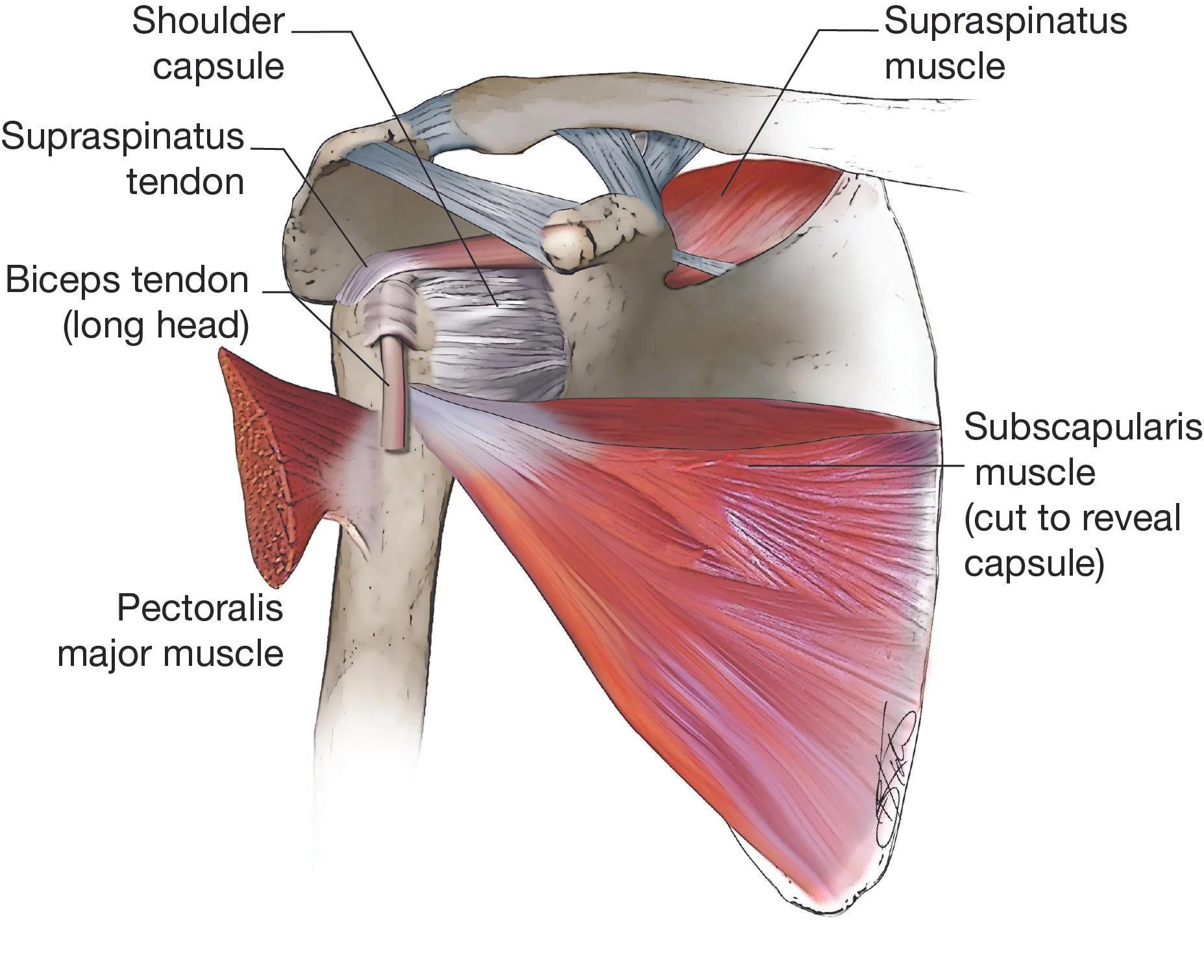
The shoulder capsule surrounds the shoulder joint and rotator cuff tendons.
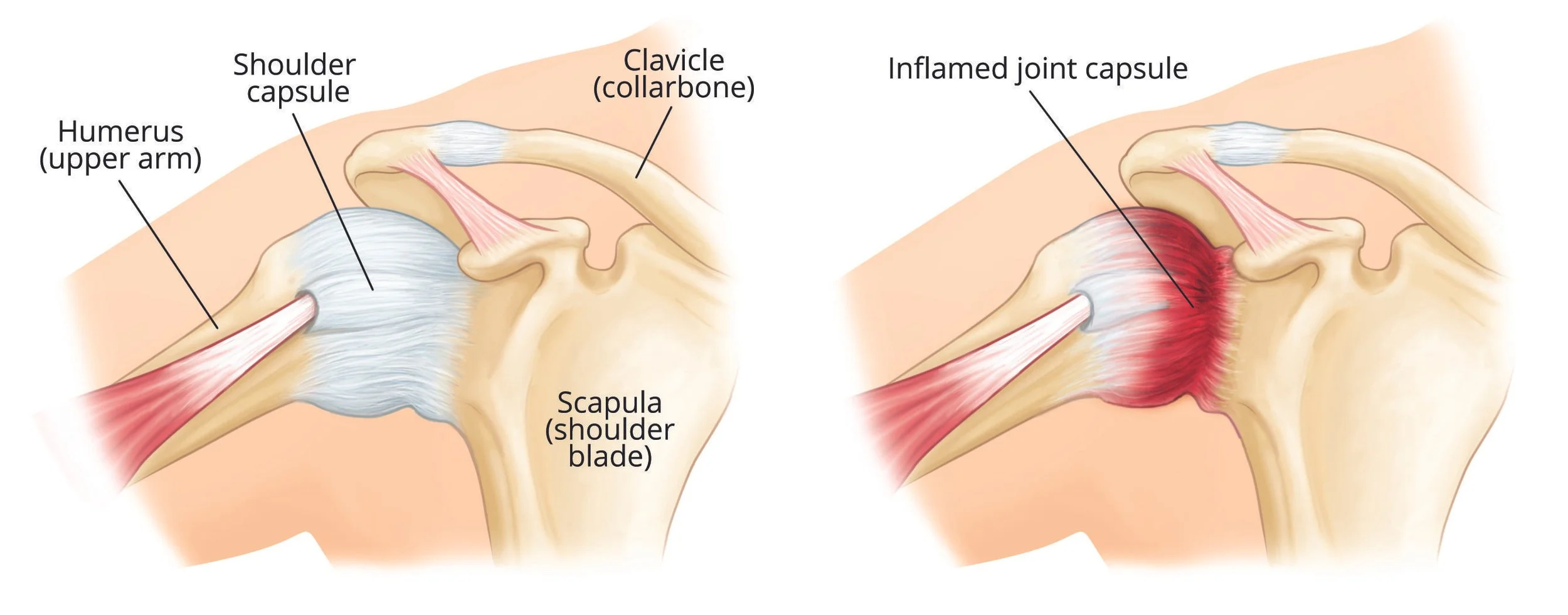
Who else is at risk?
Shoulder impingement doesn't discriminate—men and women are both affected, often due to daily habits and activities. Athletes who perform repetitive overhead motions, like tennis players, swimmers, and baseball pitchers, are at a higher risk due to the repeated stress placed on the shoulder structures.
However, this condition isn't just for athletes. Everyday activities can also increase your risk. For example, parents who spend hours hunched over a keyboard can be more prone to an injury when lifting a child. Any physically demanding routine or frequent heavy lifting (toddlers included!) can strain the shoulders, especially if there's an underlying weakness or poor movement patterns. Over time, these daily stresses can add up and contribute to shoulder damage.
Early warning signs
Shoulder impingement tends to develop gradually, with symptoms that can include:
Pain in the front or side of the shoulder.
Discomfort when reaching, lifting, or lowering your arm.
A persistent, dull ache, even when at rest.
Sharp pain with certain movements, particularly in overhead positions.
If left unaddressed, this ongoing irritation may lead to worsening inflammation and, in some cases, rotator cuff issues. Early intervention can help prevent the condition from progressing and reduce the likelihood of a more significant injury.
How physical therapy provides lasting relief
You don’t have to live with shoulder pain, and you certainly shouldn't wait for the problem to worsen. Physical therapists are highly trained movement experts who can accurately assess your body, identify the root cause of dysfunction, and treat it directly.
At Curnyn Physical Therapy, our physical therapist-owned clinic takes a personalized approach to your recovery. Your evaluation includes the entire kinetic chain—including your neck and upper back—to identify faulty movement patterns that may be contributing to your symptoms.
Our team utilizes expert manual therapy techniques to alleviate immediate tension and correct mechanical problems in the joints and surrounding tissues. Once your symptoms improve, we will develop a therapeutic movement plan to restore strength, mobility, and proper movement mechanics while minimizing irritation. This tailored program restores proper strength and mobility safely, preventing future injuries without sparking further inflammation.
By restoring healthy biomechanics, we can often help you avoid costly medical expenses, such as MRIs, and prevent more invasive interventions, including surgery.
Skip the referral and save time
When you're hurting, waiting weeks to see a specialist is frustrating. Fortunately, Texas law allows for Direct Access to physical therapy, meaning y'all don't need a doctor’s referral or prescription to schedule an appointment with us.
You can contact our clinic directly and typically be seen within 24 to 48 hours.
Early intervention can accelerate your recovery timeline and help keep your out-of-pocket healthcare costs low, allowing you to address the problem promptly and return to the activities you enjoy.
Frequently asked questions
Will physical therapy for my shoulder hurt?
Your comfort is our top priority. While you may experience some mild muscle fatigue as you build strength, our manual therapy techniques and therapeutic movement plans are designed to relieve pain, not cause it. We carefully monitor your tolerance and adjust your treatment to ensure a safe, comfortable healing process.
How long does it take to see results?
Every patient heals at their own pace based on the severity of their condition. Many of our patients notice a significant reduction in pain within the first few visits. Consistency with your therapeutic movement plan is the key to achieving long-lasting mobility and strength.
Does Curnyn PT accept my insurance?
Yes, we are a preferred provider for most major insurance networks, including Blue Cross Blue Shield, Aetna, United Healthcare, and others. We verify your benefits during your first visit so you have a clear understanding of your coverage. We also offer straightforward self-pay options for uninsured patients.
Reclaim your active lifestyle today
Whether you are sidelined from your weekly tennis match, struggling to keep up with your grandchildren, or simply trying to get through a workday without wincing, relief is entirely possible. The dedicated team at Curnyn Physical Therapy has been proudly serving the Fort Worth community for over 30 years.
We are ready to guide you on your path to healthy living. Call or text our in-office team at (817) 923-9000 to schedule your comprehensive evaluation. Let's work together to heal your shoulder so you can move freely and confidently again.